When you’re maneuvering a kitchen remodel, meal prepping can seem like an intimidating task. But with a bit of planning and the right strategies, you can maintain healthy eating habits despite the disruption. Start by evaluating your temporary cooking space and organizing your essential tools. You’ll need to adapt your meal prep approach to fit your new reality. Ready to discover how to streamline your meals and keep nutrition on track?
Key Takeaways
- Assess your temporary kitchen layout to ensure adequate counter space and organize cooking supplies for efficient meal prep.
- Plan meals ahead with a weekly menu, focusing on versatile ingredients and incorporating leftovers for simplicity.
- Utilize simple, one-pot recipes and make-ahead freezer meals to minimize cleanup and maximize nutrition.
- Invest in portable cooking equipment like electric griddles and instant pots to expand cooking options in limited space.
- Keep healthy snacks readily available in portable containers to support nutritious eating habits during the remodel.
Assess Your Temporary Kitchen Space
Before you plunge into meal prepping, it’s crucial to assess your temporary kitchen space to confirm it meets your needs.
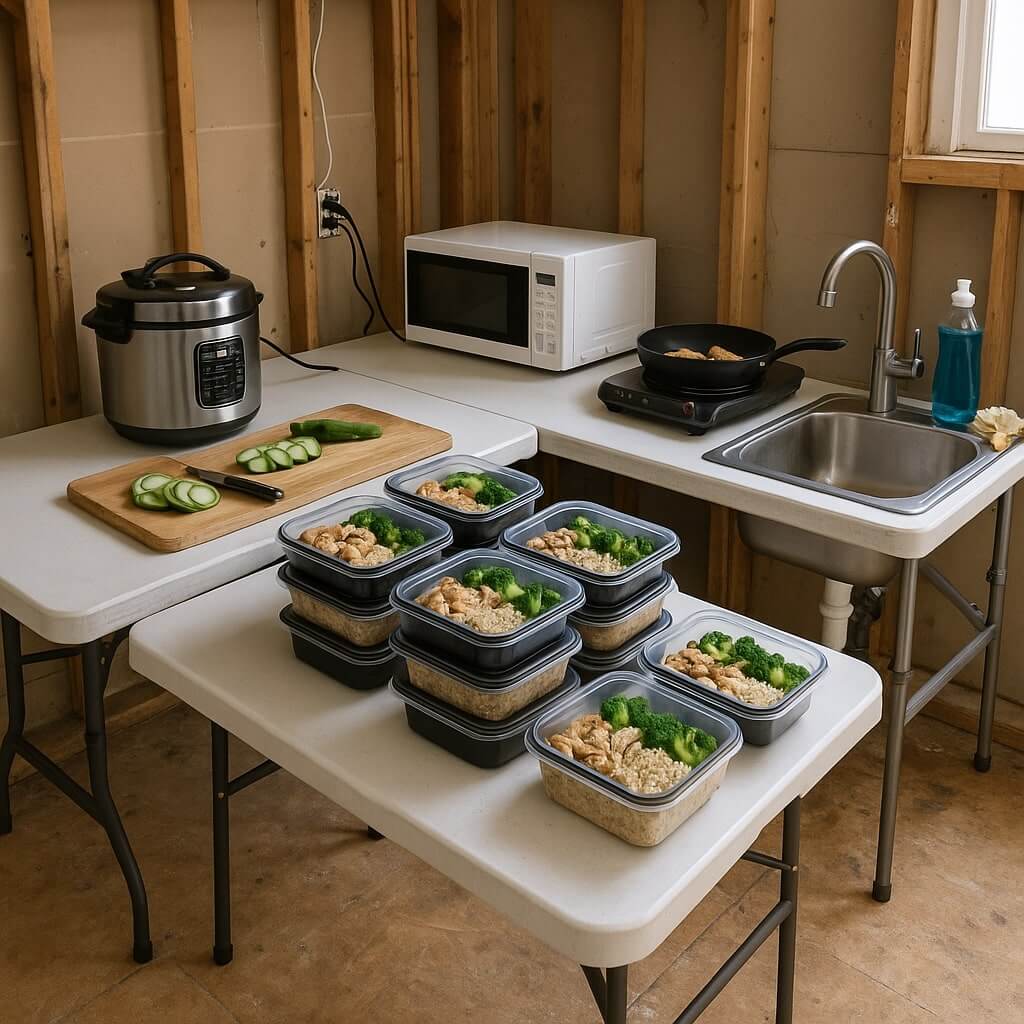
Start by evaluating your temporary kitchen layout; verify you have enough counter space for chopping and assembling meals. Identify the necessary cooking tools you’ll need, like sharp knives, cutting boards, and quality pots.
Consider storage options for ingredients and meal containers, keeping them within easy reach. Organizing your space effectively will streamline your cooking process, making it easier to prepare healthy meals.
With the right setup, you’ll feel more efficient and motivated to stick to your meal prep goals.
Plan Your Meals Ahead of Time
With your temporary kitchen set up and ready to go, it’s time to plan your meals ahead of time.
Effective meal planning simplifies grocery shopping and guarantees you have nutritious meals on hand.
Effective meal planning streamlines grocery shopping and ensures you always have healthy meals ready to enjoy.
Follow these steps:
- Choose a Theme: Focus on specific cuisines or dietary needs for variety.
- Create a Menu: Plan meals for the week, including breakfast, lunch, and dinner.
- Make a Grocery List: List all ingredients needed to avoid impulse buys.
- Prep Ingredients: Chop veggies, marinate proteins, and portion snacks for quick access.
This structured approach will keep you organized and healthy during your remodel.
Utilize Simple and Versatile Recipes
When you’re working in a temporary kitchen, sticking to simple and versatile recipes can save you time and stress.
Think about one-pot meals that minimize cleanup, make-ahead freezer recipes for easy reheating, and no-cook snack options that keep you fueled.
These strategies will help you maintain a healthy diet without complicating your cooking routine.
One-Pot Meal Ideas
One-pot meals are a game-changer for anyone maneuvering a temporary kitchen, offering simplicity without sacrificing nutrition.
You can whip up delicious, healthy dishes with minimal cleanup. Here are four versatile one-pot ideas to contemplate:
- One Pot Pasta: Combine whole-grain pasta, veggies, and your favorite protein for a quick and filling meal.
- One Pot Curry: Sauté onions, add coconut milk, spices, and chickpeas for a rich, flavorful dish.
- Quinoa Stir-Fry: Toss cooked quinoa with mixed vegetables and soy sauce for an easy meal.
- Chili: Use canned beans, tomatoes, and spices for a hearty, comforting option.
Make-Ahead Freezer Recipes
Meal prepping can be a lifesaver, especially in a temporary kitchen where space and resources are limited.
Focus on make-ahead freezer recipes that are simple and versatile—think soups, stews, and casseroles. Use freezer organization to maximize your space; label containers with dates and meal types for easy access.
Incorporate a recipe rotation to keep meals interesting and prevent boredom. You’ll enjoy healthy, home-cooked meals without the hassle. Just thaw and heat, and you’ve got a nutritious option ready to go.
Embrace this method to simplify your cooking and guarantee you stay on track during your remodel.
No-Cook Snack Options
Snack time doesn’t have to be complicated, especially in a temporary kitchen. You can whip up quick, no-cook snacks that are both healthy and portable.
Here are four ideas to keep you fueled:
- Veggies and Healthy Dips: Pair cut carrots and bell peppers with hummus or guacamole.
- Greek Yogurt Parfaits: Layer yogurt with granola and berries in a portable container.
- Nut Butter & Apple Slices: Slice apples and spread almond or peanut butter for a satisfying snack.
- Cheese and Whole Grain Crackers: Pack cheese cubes with whole grain crackers for a classic combo.
These options are easy and nutritious!
Invest in Portable Cooking Equipment
Investing in portable cooking equipment can make all the difference when you’re working in a temporary kitchen. Items like portable blenders and compact cooktops allow you to whip up healthy meals without the hassle of a full kitchen setup. Here’s a quick guide to help you choose the right tools:
| Equipment | Benefits |
|---|---|
| Portable Blender | Quick smoothies and soups |
| Compact Cooktop | Versatile cooking options |
| Instant Pot | One-pot meals in minutes |
| Electric Griddle | Great for batch cooking |
| Slow Cooker | Set it and forget it meals |
These tools keep your meal prep efficient and nutritious!
Organize Your Cooking Supplies
To make meal prepping easier in a temporary kitchen, start by sorting your cooking supplies into categories, like utensils, pots, and pantry items.
Utilize storage solutions, such as bins and racks, to maximize your space efficiently.
Don’t forget to label everything clearly so you can quickly find what you need when it’s time to cook.
Sort by Category
A well-organized kitchen can make meal prepping a breeze, even in a temporary space. To optimize your meal prep in a temporary kitchen, sort your cooking supplies by category. This approach saves time and reduces stress.
Here are four categories to take into account:
- Cooking Tools: Group pots, pans, and utensils together.
- Ingredients: Separate dry goods, canned items, and fresh produce.
- Meal Prep Containers: Keep all containers for storage in one area.
- Spices and Seasonings: Arrange by type or usage frequency.
With this organization, you’ll streamline your meal prep process and make healthy eating easier.
Utilize Storage Solutions
Organizing your cooking supplies goes beyond just sorting by category; it also involves utilizing effective storage solutions that maximize space and efficiency.
Start by investing in sturdy storage containers for your ingredients, keeping them airtight to maintain freshness. Use vertical organization to your advantage—install shelves or hanging racks to free up counter space.
Group similar items together and place frequently used supplies within easy reach. Don’t forget stackable containers for pantry staples to optimize limited storage.
Label Everything Clearly
Clearly labeling your cooking supplies can save you time and reduce stress in a temporary kitchen.
By implementing effective labeling systems and clear signage, you’ll easily find what you need amidst the chaos.
Here are four key items to label:
- Containers: Clearly mark what’s inside, especially if you’re storing prepped meals.
- Utensils: Group similar tools together and label the container.
- Ingredients: Use clear signage for spices, oils, and dry goods.
- Appliances: Label electrical cords or equipment to avoid confusion.
With everything organized, you’ll streamline your meal prep and stay focused on healthy eating.
Batch Cooking for Efficiency
Batch cooking can save you hours in the kitchen while ensuring you have nutritious meals ready to go.
Use batch cooking techniques like cooking grains, proteins, and vegetables in large quantities. This approach allows you to mix and match ingredients throughout the week.
Batch cooking grains, proteins, and vegetables in bulk lets you create versatile meals all week long.
For time-saving tips, designate one day for cooking, and prepare several meals at once. Store them in portioned containers for easy access.
Don’t forget to focus on whole foods to keep your meals healthy.
Make Use of Pre-Cooked Ingredients
When you’re short on time or space, making use of pre-cooked ingredients can be a game changer for your meal prep.
Pre-cooked grains and proteins save you valuable time, enabling you to whip up nutritious meals with ease. Here are four ideas to incorporate them into your routine:
- Toss pre-cooked grains like quinoa or brown rice into salads for added bulk.
- Mix pre-cooked proteins, such as grilled chicken or beans, into wraps for a quick lunch.
- Add them to stir-fries for a fast dinner option.
- Use pre-cooked grains as a base for hearty grain bowls.
Keep Healthy Snacks Accessible
To maintain a healthy eating routine, keeping nutritious snacks within reach is essential, especially in a temporary kitchen where options may be limited. Stock up on healthy snack ideas like mixed nuts, sliced fruits, and yogurt.
Use portable snack containers to pack these snacks for easy access throughout the day. Having grab-and-go options helps you resist unhealthy choices when hunger strikes.
Consider prepping snacks in advance; portion them into containers so they’re ready to grab when you’re on the move. This simple strategy not only supports your health goals but also makes your temporary kitchen experience smoother and more enjoyable.
Stay Flexible and Adaptable
While keeping healthy snacks accessible helps you stay on track, embracing flexibility in your meal prep can make a significant difference in a temporary kitchen.
Here are some meal prep tips to enhance your kitchen flexibility:
- Use versatile ingredients: Opt for foods that can be used in multiple meals.
- Prepare simple recipes: Choose easy-to-make dishes that require minimal equipment.
- Embrace no-cook options: Incorporate salads, wraps, or smoothies to save time.
- Plan for leftovers: Cook extra portions to simplify future meals.
Conclusion
Maneuvering meal prep in a temporary kitchen can be a challenge, but with smart planning and organization, you can maintain healthy eating habits. By evaluating your space, planning versatile meals, and investing in portable equipment, you’ll make the most of your limited resources. Keep healthy snacks handy and stay flexible with your approach. Remember, a little creativity goes a long way in ensuring you stay nourished and energized during your remodel. Happy cooking!