When planning your kitchen remodel, estimating costs accurately is essential to keeping your project on track. You’ll want a clear understanding of your goals and a thorough list of necessary components. Using a budgeting template can streamline this process, helping you categorize expenses and monitor your spending. But how do you guarantee your estimates remain realistic and adaptable as your project evolves? Let’s explore the steps to create a robust financial plan for your renovation.
Key Takeaways
- Start by outlining all expected expenses, including materials, labor, and design elements in your budgeting template.
- Research average costs for each component to create realistic estimates based on quality and local pricing.
- Utilize a clear table format in the template to compare estimated vs. actual costs for better financial clarity.
- Include a contingency fund in your budget to accommodate unexpected expenses that may arise during the remodel.
- Conduct regular reviews of your expenses using the template to ensure you stay on track and make necessary adjustments.
Understanding Your Kitchen Remodel Goals
What’s driving your desire to remodel your kitchen?
Perhaps you crave a more functional kitchen layout that enhances your cooking experience. Maybe your design preferences have evolved, and you want a space that reflects your style.
Consider how you use your kitchen daily—do you entertain often, or is it more about family dinners? Identifying specific goals will guide your remodel effectively.
Whether you’re dreaming of an open-concept space or sleek cabinetry, clarifying what you want will help you make informed decisions.
Ultimately, your kitchen should be a harmonious blend of practicality and beauty that suits your lifestyle.
Creating a Detailed Checklist of Necessary Components
As you commence your kitchen remodel journey, creating a detailed checklist of necessary components can streamline the process and keep you organized.
Start by listing essential kitchen features, such as cabinets, countertops, and appliances. Don’t forget to include design elements like lighting, flooring, and backsplashes that will enhance the overall aesthetic.
Consider functionality too; think about storage solutions and layout adjustments that improve workflow. Break down your list into categories for easier reference, ensuring you cover every aspect from plumbing to electrical needs.
With a thorough checklist, you’ll navigate your remodel with confidence and clarity, making the process enjoyable.
Researching Average Costs for Materials and Labor
With your checklist in hand, it’s time to turn your attention to understanding the financial aspects of your kitchen remodel.
Start by researching average costs for materials based on their quality; higher-end options may elevate your design but also your budget. Look into local suppliers and compare prices to find the best deals.
Next, investigate labor rates in your area, as these can vary greatly. Skilled professionals might charge more, but their expertise can save you money in the long run.
Utilizing a Budgeting Template for Your Remodel
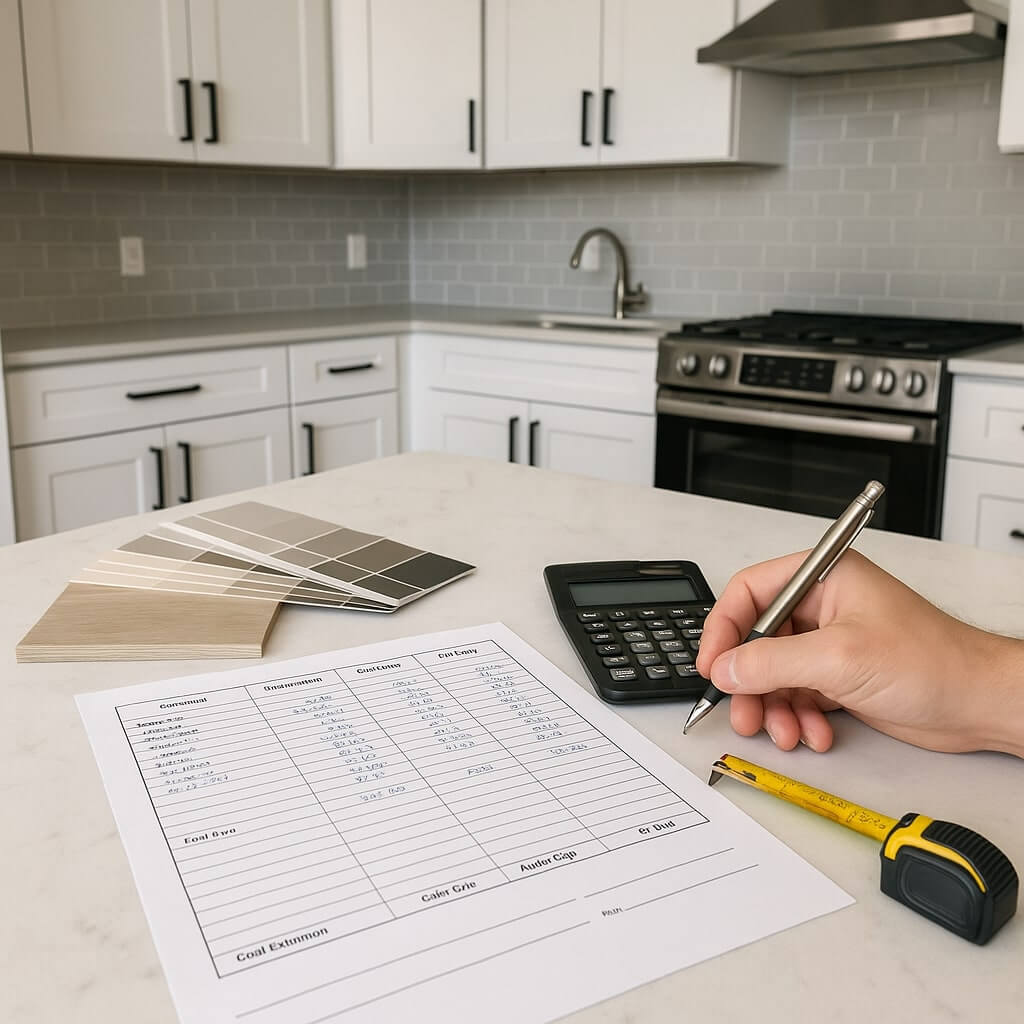
To guarantee your kitchen remodel stays on track financially, utilizing a budgeting template can be a game-changer. This tool helps you implement effective budgeting strategies and allows for template customization to fit your unique needs. Start by outlining your expected expenses and track actual costs against your budget.
| Item | Estimated Cost | Actual Cost |
|---|---|---|
| Cabinets | $3,000 | $2,800 |
| Countertops | $2,500 | $2,700 |
| Appliances | $4,000 | $3,900 |
| Flooring | $1,500 | $1,600 |
| Labor | $2,000 | $2,100 |
With this template, you’ll ascertain financial clarity throughout your remodel.
Adjusting Your Budget Based on Priorities
When you prioritize your kitchen remodel expenses, you can make smarter decisions that align with your vision and budget.
Start by conducting a cost benefit analysis to determine which features matter most to you. Here are four tips for adjusting your budget based on your priorities:
- Identify Essential Features: Focus on appliances and layouts that improve functionality.
- Research Material Costs: Choose quality materials that fit your budget without compromising style.
- Consider Long-Term Value: Invest in upgrades that increase your home’s value.
- Allocate Contingency Funds: Set aside money for unexpected expenses to stay on track.
Tracking Expenses Throughout the Renovation Process
As you commence your kitchen remodel, keeping a close eye on your expenses is essential.
You’ll want to budget for unexpected costs while organizing receipts and invoices meticulously, ensuring nothing slips through the cracks.
Budgeting for Unexpected Costs
While planning your kitchen remodel, it’s essential to recognize that unexpected costs can arise at any moment, potentially derailing your budget.
To effectively manage unforeseen expenses, consider these strategies for cost contingency:
- Set aside a buffer – Allocate 10-20% of your total budget for surprises.
- Research materials – Know the costs of alternatives in case of price changes.
- Communicate with contractors – Discuss potential issues before starting work.
- Track expenses daily – Use a spreadsheet or app to monitor spending closely.
Organizing Receipts and Invoices
A well-organized system for managing receipts and invoices can be your best ally during a kitchen remodel.
Start by creating a dedicated folder—physical or digital—for receipt organization. As you purchase materials and services, promptly file each receipt and invoice, ensuring they’re easily accessible.
Consider using apps designed for invoice management, which can streamline tracking and categorization. Label everything clearly, so you can quickly find what you need when it’s time to review expenses.
This proactive approach not only saves time but also helps you stay within your budget, making your renovation process smoother and more efficient.
Tracking Progress and Spending
To keep your kitchen remodel on track and within budget, tracking both progress and spending is essential. By monitoring your expenses, you’ll spot areas needing budget adjustments early on.
Here’s how to stay organized:
- Create Expense Categories: Break down costs into materials, labor, appliances, and permits.
- Use a Tracking Tool: Utilize spreadsheets or apps for real-time updates.
- Compare Estimates: Regularly assess contractor quotes against actual spending.
- Review Weekly: Set aside time each week to evaluate progress and adjust budgets accordingly.
This proactive approach guarantees you stay informed and in control throughout your renovation journey.
Conclusion
By using a budgeting template, you’re setting yourself up for a successful kitchen remodel. You’ve got the power to track every expense, ensuring you stay within your budget while still achieving your vision. Remember to adjust your priorities as needed and keep an eye on actual costs versus estimates. With this organized approach, you’ll navigate any unexpected challenges smoothly, transforming your kitchen into a space that perfectly blends functionality and style. Happy remodeling!